Could we reproduce this pattern on a keychain?
18/07/2025
Here’s a request like numerunique loves: a clear goal, simply defined with a large margin of creativity but no obviously trivial solution.
An extraordinary pattern
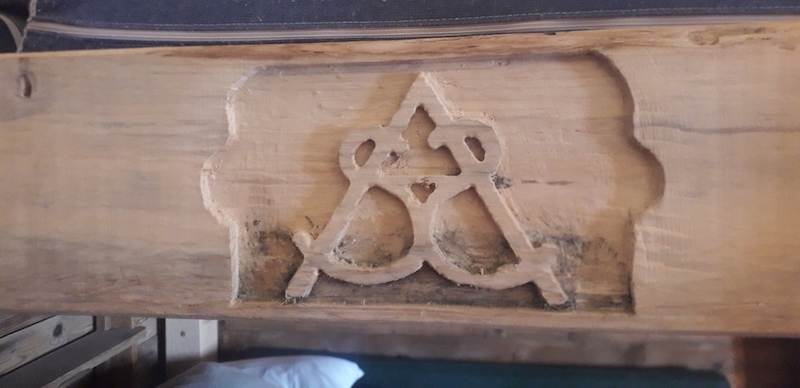
It’s in a tiny mountain chalet, where essentials are already a great luxury, isolated among skiers in winter and Tarine cows in summer. On the post of a simple bed, there’s a symbol carved in pine, eloquently marking its owners. It belongs to brothers Stéphane and Sébastien Amiez, two excellent skiers, the latter, the famous "Bastoune," with a world-class ski champion record!
The pattern features the A of Amiez, symbolizing a mountain profile, with the two S’s of Stéphane and Sébastien, also resembling the graceful curves a double slalom leaves in powder snow.
This pattern is a work by Jacky Marchet, a retired carpenter and also a ski instructor. It’s a pattern numerunique would have been proud to create and is honored to work on.
More than a technical challenge
The pattern was clearly carved in negative with a router. Initially, reproducing it suggests using a CNC milling machine. This requires a digital version of the pattern, but carving the symbol’s base surfaces with a cylindrical tool would be highly complex for an unsatisfactory result: sharp internal angles can’t be achieved with a round tool. This is evident in the model.
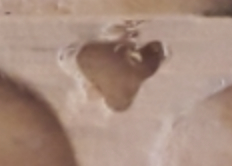
So, we choose to reproduce the pattern in recess; now it’s "just" about creating the tool’s path.
Vector digitization
We could recreate the pattern from scratch with a true A and circular arcs. But that misses the harmonious proportions of the original.
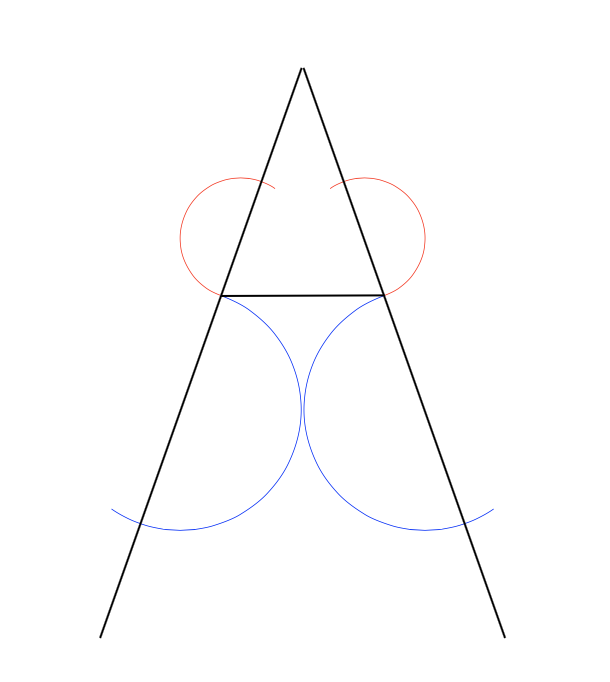
To respect it better, we start by tracing the outline over the photo of the original.
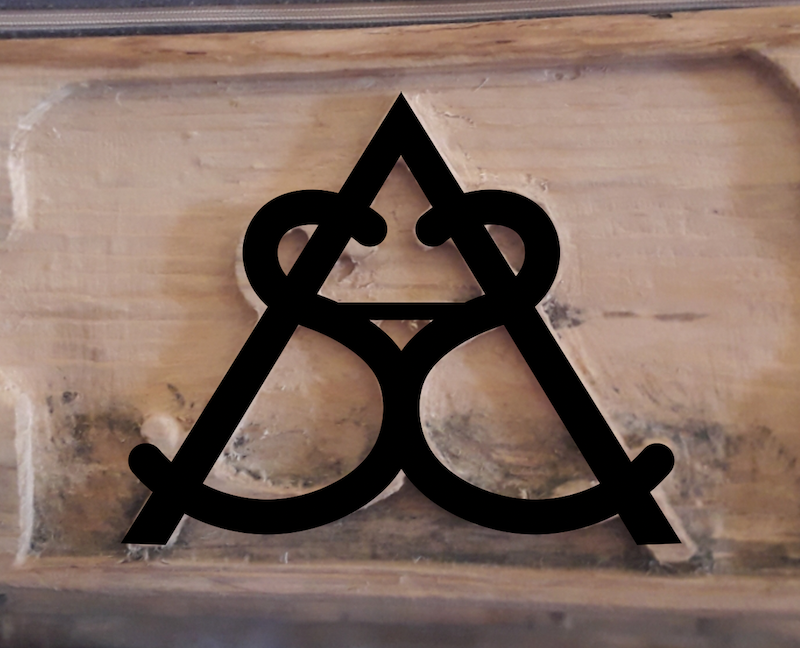
Next, we convert this vector drawing into a path. For the A, it’s simple: an inverted V path and a horizontal one. For the S’s, convert one, and the other is elegantly obtained by vertical symmetry. The S is best translated into a series of Bézier curves.
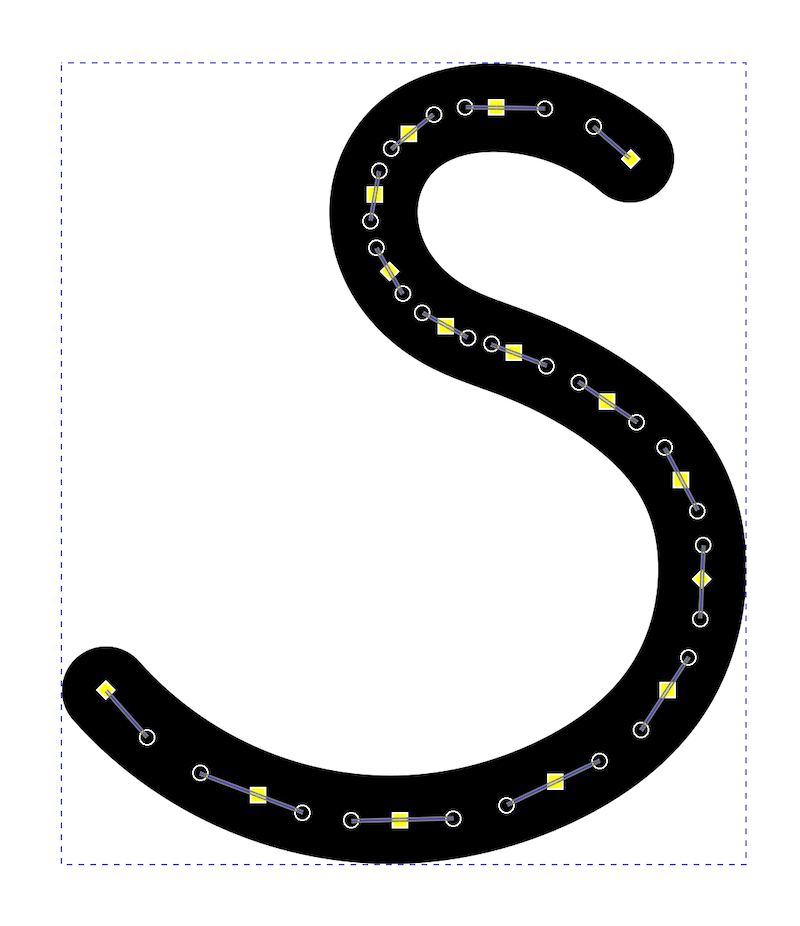
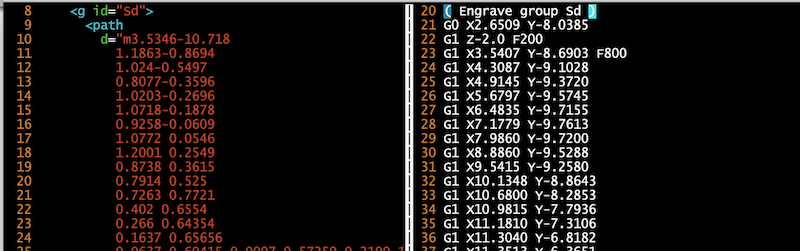
However, G-code lacks instructions for Bézier curve movements. So, we need another transcription into linear segments. This step ends with a neat SVG file coded with <path … />.
Transcription to G-code
The next step is translating these vector paths into machining paths. This is a problem matching numerunique’s IT expertise: a simple conversion between coding systems. The only difficulty was minor adjustments for orientation and origin shifts between SVG and G-code.
Shaping a pebble and securing the cord
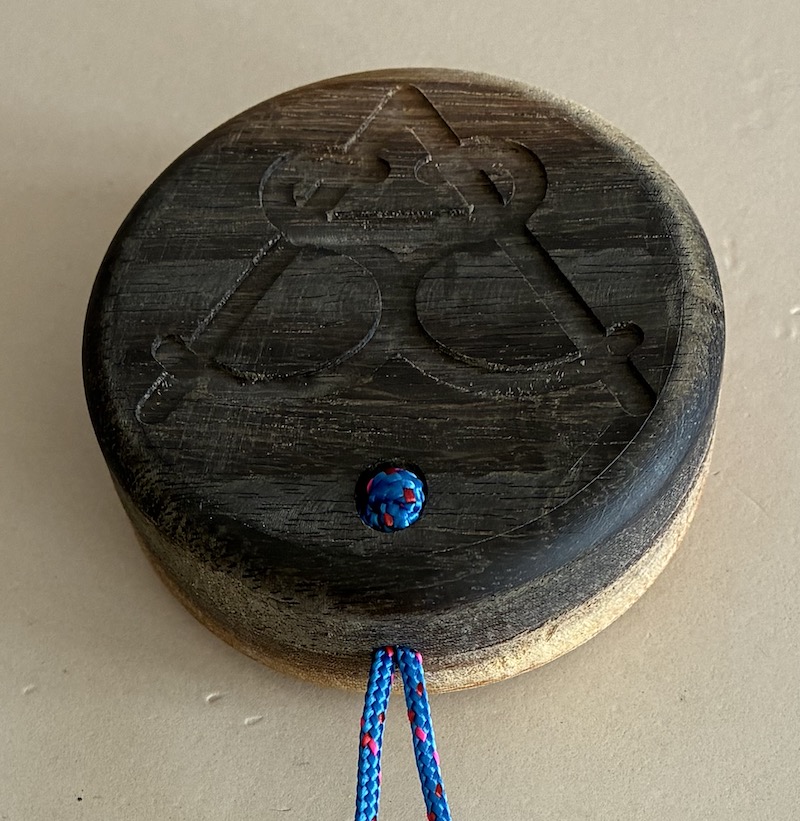
Since the requester preferred a round keychain, we complement the pattern-drawing programs with those shaping a pebble. We add a fillet between the cylinder and the pebble’s faces, making the keychain gentler on pockets. Though this part requires three more tools, it doesn’t warrant an illustration.
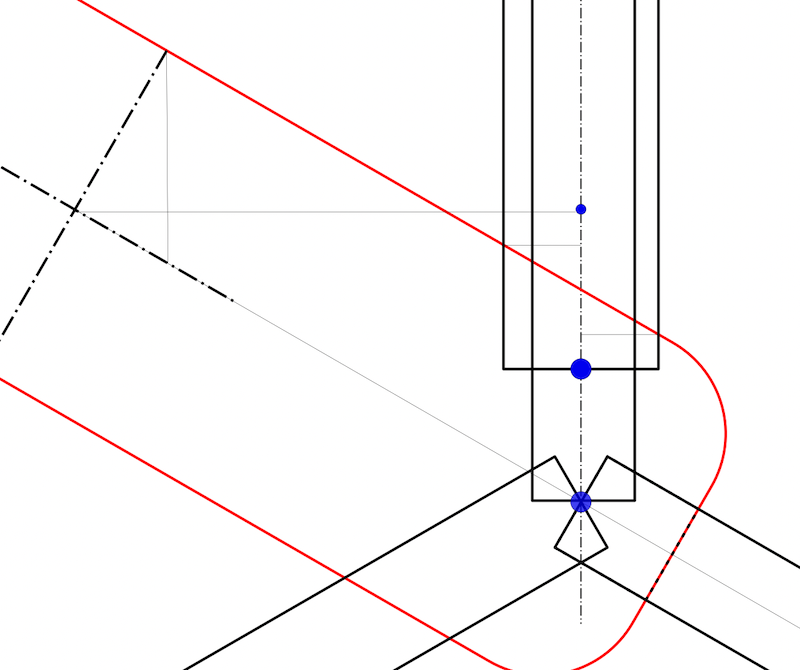
For the cord anchor, instead of a simple through-hole, since numerunique has a CNC mill with a fourth axis for precise angle control, we replicate a proven solution for its ellipsoid-shaped keychains. This calls for some new geometric calculations.
The result
Though the object is best appreciated in hand, a photo gives a glimpse:
A simpler solution
The SVG file offers near-direct access to a much easier implementation with laser cutting and engraving. The trade-off for this simpler solution is settling for a through-hole for the cord.
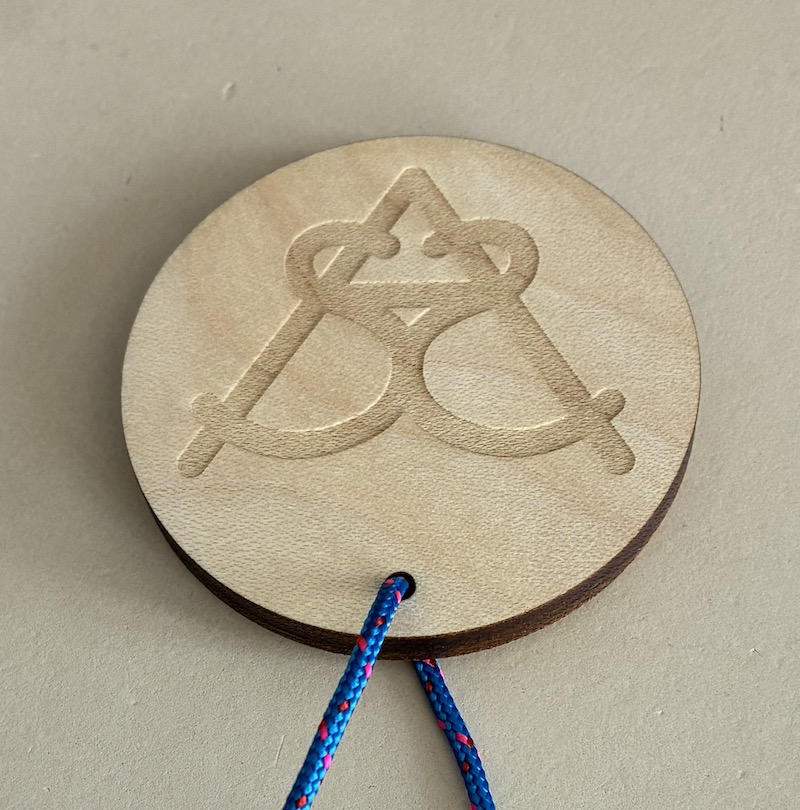
The laser engraving result is nonetheless impeccable.